
Peripheral neuropathy, radiculopathy, and focal entrapment are different clinical problems.
Peripheral nerve and neuropathy conditions
Peripheral Neuropathy
Peripheral neuropathy means damage or dysfunction affecting peripheral nerves. It can involve sensation, strength, balance, or autonomic function, and the cause must be evaluated rather than assumed from tingling or burning alone.
Quick orientation
What to know first
Symptoms may overlap, so distribution alone does not prove one diagnosis.
Evaluation should look for the cause, neurologic deficits, and conditions that need different care.
What we may consider next
How we may treat this
Treatments that may be considered after an evaluation. Which option, if any, fits depends on the cause of your pain, your examination, prior treatment and your health history; your physician will explain the benefits, limits and risks.
Options that may be considered
These are options, not required steps. Selection depends on the diagnosis and individual review.
Treatment option
Spinal Cord Stimulation
For selected painful diabetic neuropathy of the feet and legs that has not responded to other care, with a trial first; it does not reverse nerve damage
Alternatives, not a sequence
These options may be considered separately; one does not automatically lead to another.
Selected alternative
Peripheral Nerve Stimulation
Only for pain from one identifiable nerve, not widespread neuropathy; device indications vary
Symptoms are clues, not a diagnosis
What peripheral neuropathy can feel like
Symptoms help define a syndrome, but they do not confirm which structure is responsible. Distribution, timing, aggravating factors, neurologic findings, function, and important alternatives all shape the evaluation.
Numbness, tingling, burning, altered sensation, or weakness can occur, but the pattern matters.
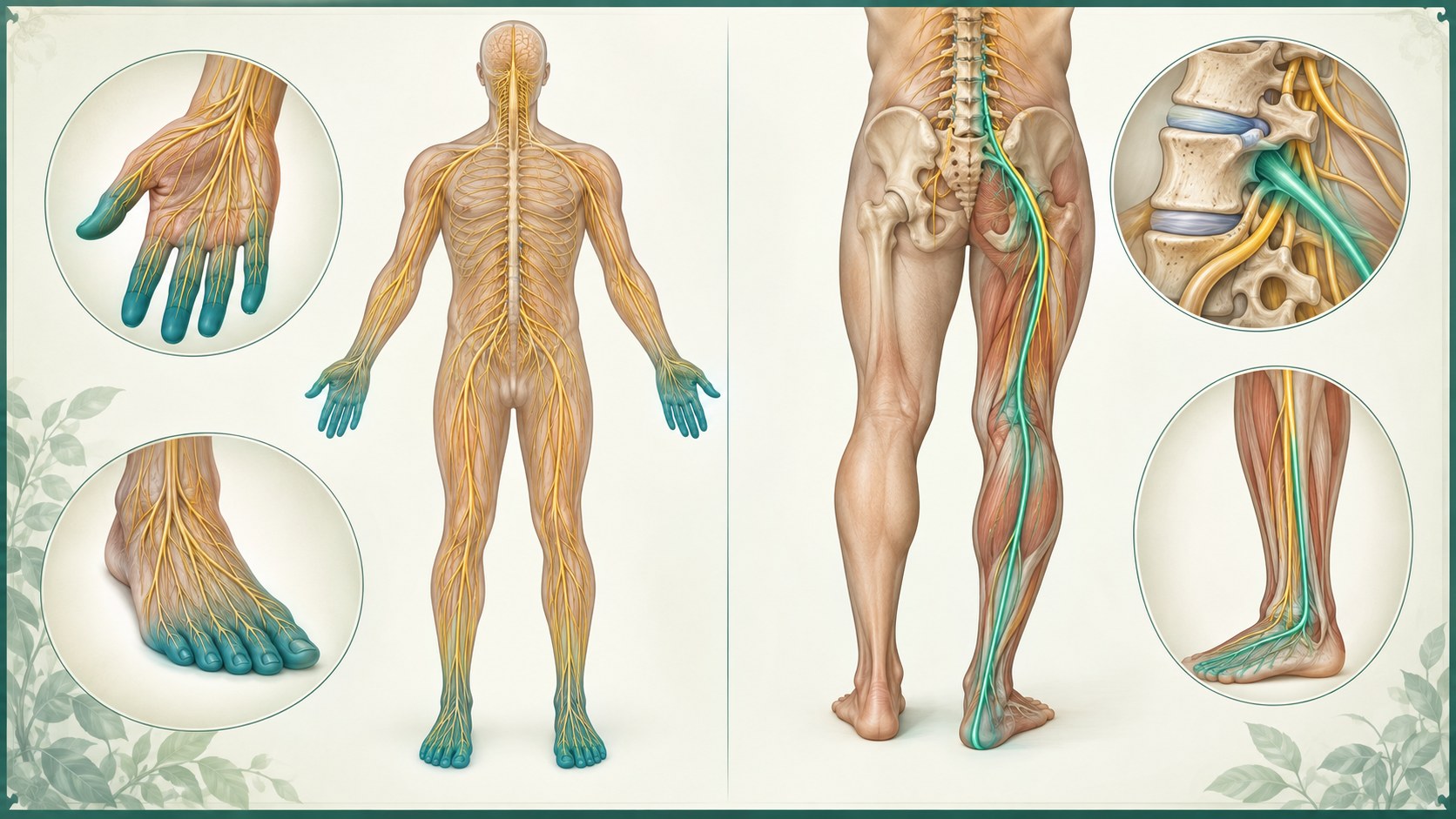
Diffuse symptoms in both feet or hands differ from one named-nerve territory or a spinal root pattern.
Function, balance, grip, gait, sleep, and progression help define urgency and next testing.
Relevant anatomy
What causes peripheral neuropathy
Peripheral nerves carry sensory, motor, and autonomic signals outside the brain and spinal cord. A length-dependent polyneuropathy often begins distally and symmetrically, while radiculopathy follows a spinal root and entrapment affects a named nerve at a focal site.
History and examination first
How peripheral neuropathy is diagnosed
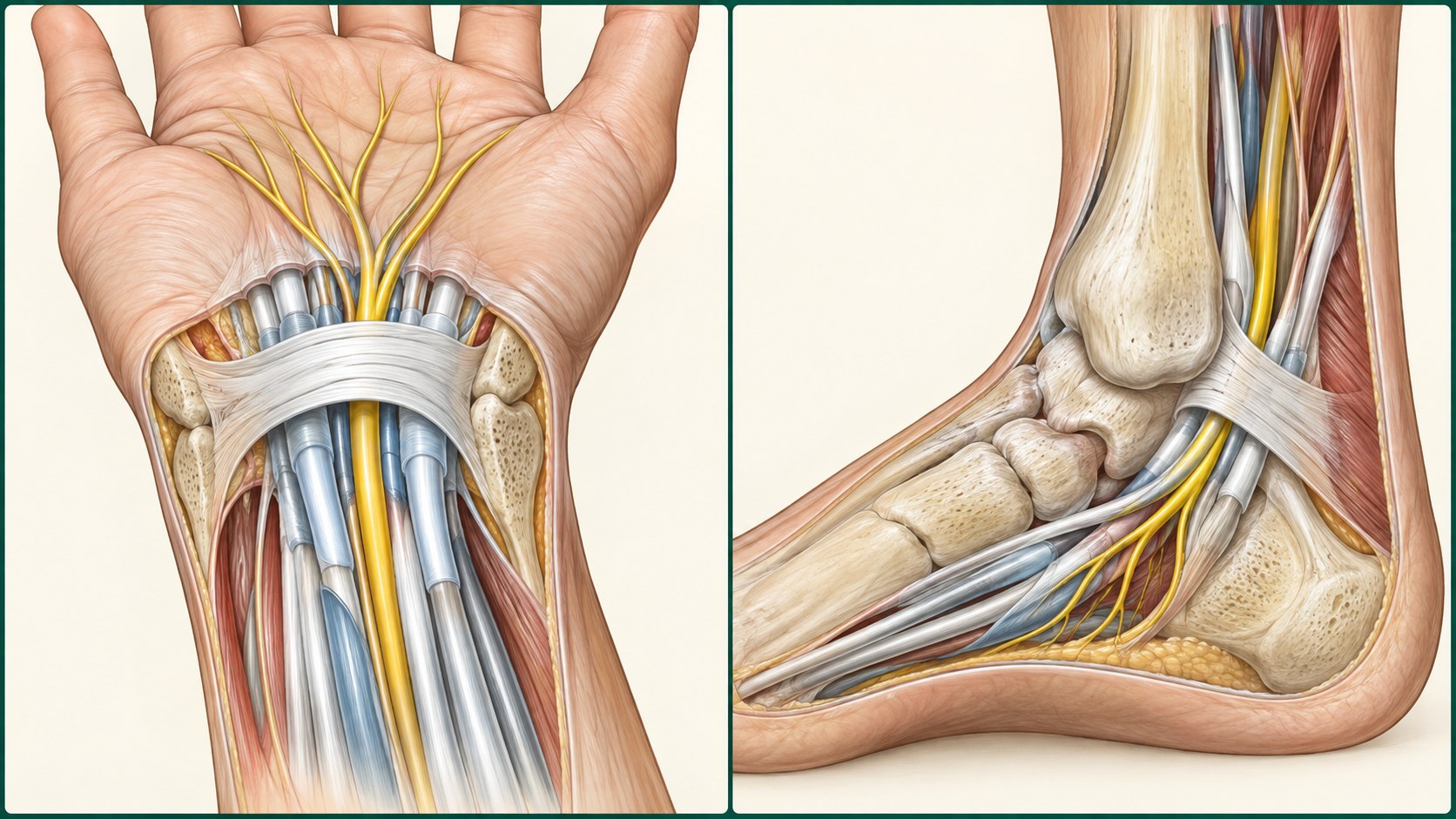
Evaluation combines the history, neurologic and musculoskeletal examination, medical risk review, and selective testing. Electrodiagnostic studies, imaging, ultrasound, or laboratory tests can add information, but no single result replaces clinical correlation.
Keep the differential open
Conditions that can feel like peripheral neuropathy
Keep common and serious alternatives open until the evidence supports a narrower conclusion.
Radiculopathy or spinal cord disease
Focal entrapment versus diffuse polyneuropathy
Joint, tendon, vascular, inflammatory, metabolic, toxic, hereditary, or medication-related causes
Core care
Non-surgical care for peripheral neuropathy
Procedure discussions belong inside a broader plan that protects neurologic function and daily activity.
Education and protection of vulnerable skin or joints
Activity, therapy, and assistive strategies matched to deficits
Medical evaluation for reversible or treatable contributors
Reassessment when weakness, balance, distribution, or function changes
Evidence at a glance
Evidence at a glance
Evidence strength, comparator, follow-up, and selection affect interpretation.
High-yield evaluation for distal symmetric polyneuropathy includes selected laboratory testing guided by the pattern and clinical context.
Electrodiagnostic and genetic testing are selective tools rather than universal answers.
Evidence does not support treating every neuropathic symptom as one disease or one procedure target.
Decision quality matters
Evidence, limits, and who it may fit
A listed option does not establish candidacy. Diagnosis, anatomy, prior care, risk, alternatives, goals, and evidence must align.
Referral and urgent signs
When peripheral neuropathy needs urgent care
These findings can change the timing or destination of care.
New or rapidly progressive weakness
Loss of bowel or bladder control or new saddle numbness
Fever, spreading redness, major trauma, or a rapidly changing neurologic pattern
The visit
Your first visit for peripheral neuropathy
The visit should narrow the diagnosis, identify safety and referral needs, review imaging and prior care in context, and choose the next useful decision. The clinician should explain uncertainty and what a treatment is expected to add before it is performed.
Define the symptom distribution, timing, and functional effect
Examine strength, sensation, reflexes, joints, spine, and named nerve pathways as appropriate
Use imaging, laboratory testing, or electrodiagnostic studies selectively
Choose conservative care, a target-specific procedure discussion, or referral without assuming a fixed sequence
Common questions
Peripheral Neuropathy FAQ
These answers are educational and cannot determine an individual diagnosis or treatment plan.
Is peripheral neuropathy the same as sciatica?
No. Sciatica usually describes a spinal nerve-root pattern, while polyneuropathy commonly affects multiple distal nerves.
Does tingling prove neuropathy?
No. Tingling can arise from entrapment, radiculopathy, vascular problems, medication effects, and other causes.
Is every neuropathy treated with a procedure?
No. Care often focuses on the cause, safety, function, symptom management, and selective referral.
What causes peripheral neuropathy?
Diabetes is a common cause. Others include vitamin B12 deficiency, alcohol, some medicines including certain chemotherapy, thyroid or kidney disease, and inherited conditions. Evaluation often includes blood tests and sometimes nerve testing. New, rapidly worsening weakness or numbness needs prompt medical care.
Where can I be seen for neuropathy pain?
New-patient visits are available at the Allen office, Monday to Friday, and at the Wylie office on Tuesdays. Procedures, when they are part of the plan, are performed in Allen.
Diagnosis before procedure
See a pain specialist for peripheral neuropathy in Allen, TX
A focused evaluation can clarify the diagnosis, important alternatives, and the next step that fits the clinical picture.